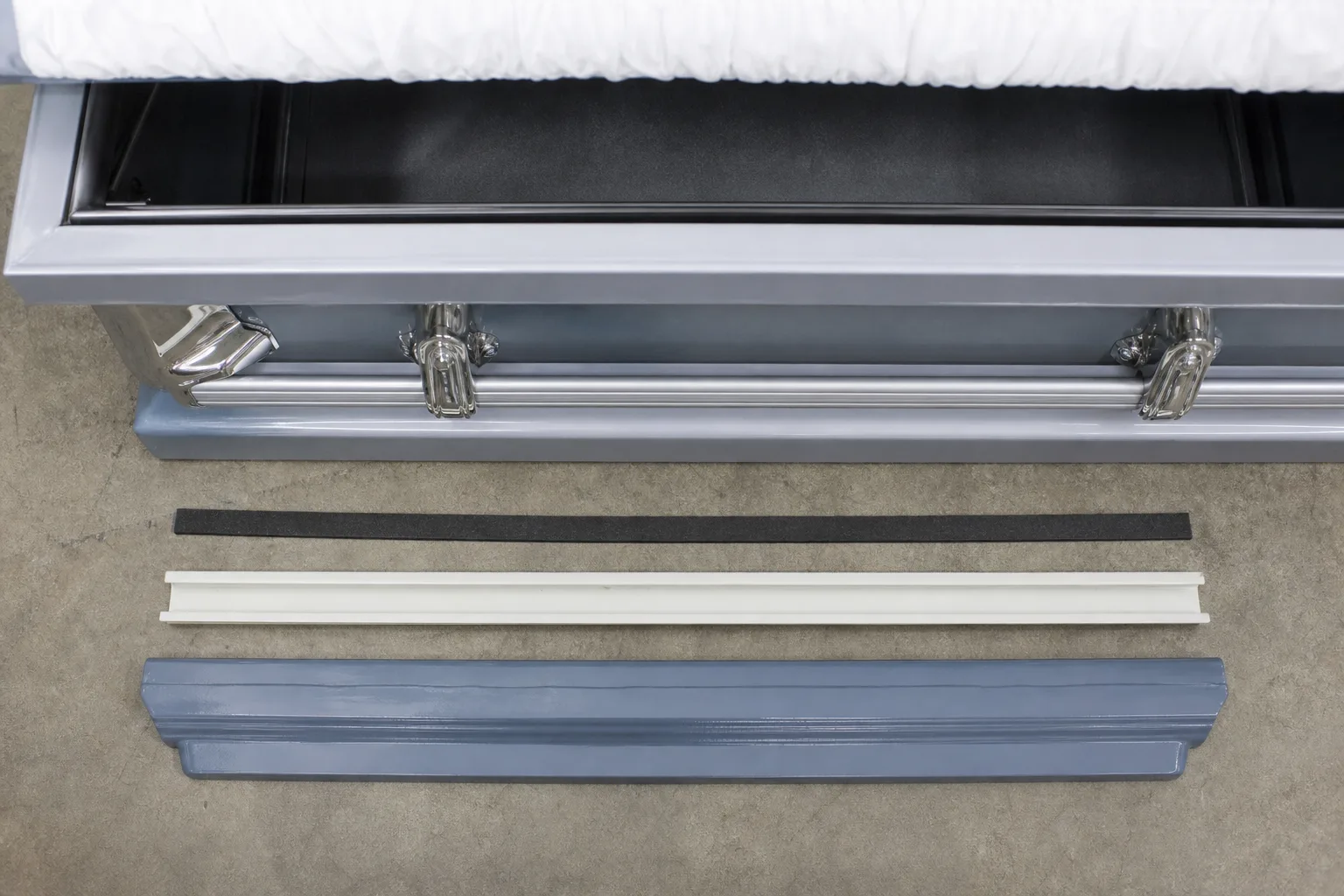
A gasketed casket costs more than the same model without one. Here is what the rubber seal is, what happens inside a closed container, and the lines a careful buyer checks first.
Walk a casket showroom and you will find two versions of what looks like the same box, one priced a few hundred dollars above the other, with a small tag on the higher one reading protective, sealer, or gasketed. The difference is a strip of rubber running around the lip of the shell and a cam-and-gasket closing mechanism that draws the lid down onto it. That strip is the entire physical distinction. Understanding what it does, and what no strip of rubber can do, is the difference between a decision you made and one that was made for you at the counter.
Read the warranty before you read the brochure
A gasketed casket typically carries a written warranty, and the warranty is the most honest document in the room, because it has to survive a lawyer. Read what it covers. It almost always warrants the casket itself against the entry of air, water, and dust for a stated number of years, and it says nothing whatever about the condition of what is inside. That is not a loophole a manufacturer forgot to close. It is a deliberate limit, and the Federal Trade Commission, which oversees funeral goods and services sales through its Funeral Rule, prohibits sellers from claiming that any casket or outer container will preserve remains indefinitely. If a salesperson says otherwise, the warranty in your hand disagrees with them.
What actually happens inside a closed container
Decomposition is not paused by excluding outside air, because the bacteria that drive it are already present in the body at the moment of death and require no oxygen to work. Seal the container and you change which organisms dominate, not whether the process runs. Anaerobic bacteria take over, and they produce gas and liquid rather than the drier, slower breakdown that follows when a container breathes. The practical result is that a sealed casket can build internal pressure over months and years. Manufacturers know this, which is why many gasketed models include a small vent or burping device, and why installers are trained to release pressure before a crypt is opened. None of this is hidden. It simply is not what the word protective suggests to a buyer standing in a showroom on the worst week of their life.
Why some cemeteries have opinions about it
Cemetery objections are operational rather than philosophical. Above-ground entombment in a mausoleum is where pressure matters most, because a crypt is a shared building with staff, visitors, and neighboring spaces, and a container that leaks or vents inside one creates a problem the cemetery has to solve. Some mausoleums therefore require unsealed containers, require a specific vented model, or require that the gasket be removed or the seal broken before entombment. Green burial grounds go the other way for a different reason, restricting metal and rubber outright in favor of materials that break down. Ask the cemetery in writing what it permits before you buy, because the container has to satisfy the ground it goes into, and no showroom knows every local rule.
What the extra money buys, and how to check the number
Ask for the general price list and find the same casket model in both configurations, because most manufacturers build them as a pair and the spread between them is the real price of the gasket. Sometimes the gasketed version also has a heavier gauge of steel, a different interior, or a hardware upgrade folded into the same line item, in which case you are pricing several changes at once and should ask which part costs what. The gasket does buy something concrete and short-term: it slows the entry of groundwater and soil into the shell, which matters to families for whom the idea of an intact container carries genuine weight. That is a real preference and worth paying for if you hold it. What it does not buy is a suspended state inside, and a buyer who knows that is paying for the thing that exists rather than the thing implied.
The check is short. Get the warranty text, compare the sealed and unsealed price for the identical model, confirm the cemetery's rule for the space you have bought, and ask the funeral director directly what happens to internal pressure over time. Four questions, four plain answers, and the choice becomes yours.